
Super Matino - Adventure Game
GeDa DevTeamAdventure
4.7384.00 Reviews
- Version
- 1.90
- Installs
- 10.00M
- Age Rating
- Everyone
Screenshots





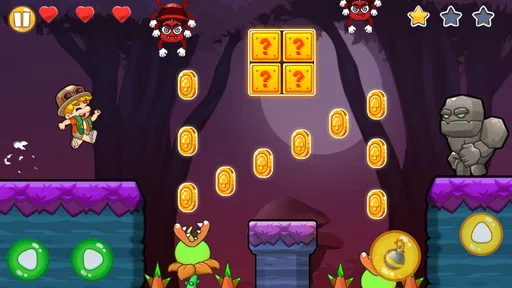


Our Review of Super Matino - Adventure Game
 Analysis by Appyee
I spent time with Super Matino as a light adventure game built around a simple promise: guide Matino through dangerous stages, deal with monsters, and work toward rescuing the Princess. That straightforward setup is part of its appeal. It is easy to understand within moments, yet it gives you enough room to improve your timing rather than treating every stage as something to rush through once.
GeDa DevTeam keeps the experience focused on traditional platform-adventure play. You are not opening a large role-playing system or a complicated online world; you are stepping into a compact quest where movement, reactions, and learning from mistakes matter most. I found that focus helpful when I wanted a game I could pick up without a long tutorial or a large set of menus to manage.
The game is free to install, carries an Everyone age rating, and works on Android devices starting with version 6.0. Its current version is 1.90, while in-app purchases range from $0.99 to $10.99 per item. Those details make it accessible to a broad audience, although families should still remember that optional purchases are present even though the game itself does not require an upfront payment.
How the basic adventure loop feels in everyday play
My normal session begins with a simple goal: enter a stage, move carefully, overcome whatever blocks the route, and keep going until I reach the next safe point or finish the section. That familiar rhythm makes the game approachable for younger players and for anyone who prefers an adventure title that explains itself through play instead of filling the screen with instructions.
The strongest part of the baseline workflow is the way it encourages observation. I do not get much from charging ahead blindly. A monster placed near a jump, an awkward gap, or a section that looks harmless can all punish impatience. After a failed attempt, I usually remember one specific problem and adjust my next run around it. That makes progress feel earned rather than random.
For a quick everyday scenario, I can imagine playing during a short break while waiting for an appointment. One attempt may end quickly, but it still teaches me something about the route. If I have more time later, I can return with a better plan instead of starting from zero mentally. This makes the game more suitable for brief bursts than an adventure that demands a long uninterrupted sitting.
I would not describe the controls or objectives as demanding in the way a complex action game can be. The challenge comes from consistency. A player who watches patterns, leaves enough room before committing to a jump, and avoids unnecessary risks will generally have a better experience than someone who treats every obstacle as a race.
That also explains why the game can appeal to different ages. The Everyone rating matches its broad, accessible presentation, while the need for timing gives older players a reason to stay engaged. It is not simply a passive children’s game, but it also does not bury its adventure behind mature themes or complicated systems.
One useful habit is to separate exploration from speed. On the first attempt through an unfamiliar section, I focus on discovering where danger appears and how much space I need. On later attempts, I try to shorten the safe movements. This two-pass approach is more reliable than trying to play perfectly immediately, especially when a stage introduces a new obstacle.
What I check before trying to play faster
I like to begin by checking how the game feels on my particular phone rather than assuming that every device will respond identically. The minimum Android requirement is version 6.0, so compatibility is broad, but an older device can still make touch input feel less comfortable than a newer one. If movement feels delayed or cramped, rushing will only make the problem more frustrating.
I also look through the available settings before settling into longer sessions. I do not expect a large configuration suite from a compact adventure game, and I would not recommend changing options repeatedly during a difficult stage. The practical approach is to check the controls, sound, and any display-related choices that are available, then keep the arrangement that makes actions easiest to read.
Sound deserves a little attention. Playing quietly is convenient in public, but audio can help establish a clearer sense of what is happening around Matino. I often prefer a moderate volume rather than muting everything immediately. At home, that makes the game feel more active; in a waiting room, turning it down keeps the experience unobtrusive without making the visual action harder to follow.
Another worthwhile setting habit is to avoid changing several things at once. If I alter the control arrangement and visual preferences together, I cannot tell which change helped. I test one adjustment, play a few attempts, and keep it only if it reduces hesitation. That sounds basic, but it prevents the common mistake of blaming the game for a setup that I have not actually learned.
Because optional purchases are available, I would also make the purchase environment comfortable before handing the phone to a child. The game is free, but free access and unrestricted spending are not the same thing. A parent who wants a simple family-friendly adventure should treat the purchase controls on the device as part of the setup, not as something to think about after an accidental tap.
The rating of 4.7 from around 42 thousand ratings suggests that many players respond well to this formula, and the audience is substantial, with over 10 million installs. I see those figures as signs of broad appeal rather than proof that every player will enjoy it. Someone looking for deep character development, a huge map, or a competitive multiplayer scene should not choose this game based on popularity alone.
Repeatable patterns that make progress smoother
Once I understand a section, I use a repeatable routine: pause mentally before a risky movement, identify the nearest threat, commit to one action, and reassess immediately afterward. This is more effective than holding a direction or tapping continuously out of nervousness. The game rewards deliberate input because small mistakes can turn a safe route into a failed attempt.
I also try to keep my attention on the next meaningful hazard rather than the entire stage. Looking too far ahead makes me miss what is directly in front of Matino. Looking only at the character can have the opposite problem, because I react too late to the space ahead. The useful middle ground is to scan just far enough to prepare without abandoning the current movement.
A second pattern is to treat failed attempts as route notes. I remember whether I lost because I moved too early, waited too long, approached a monster from the wrong angle, or simply tried to do too much at once. That turns repetition into practice. Without this habit, replaying the same section becomes a test of patience rather than a way to improve.
When I am comfortable, I reduce unnecessary pauses one at a time. I do not try to make the whole stage fast immediately. Instead, I choose one familiar sequence and make it cleaner, then connect it to the next sequence. This gradual approach keeps the game enjoyable and gives me a clear sense of improvement even when the overall adventure still has difficult moments.
It is also worth resisting the temptation to spend money as a substitute for learning. The available purchases may be useful to players who want optional convenience, but my best progress comes from understanding movement and enemy placement. For a casual player, spending a small amount may feel reasonable if it improves enjoyment; for someone trying to master the stages, relying on purchases can remove the satisfaction of solving the route personally.
Compared with many modern adventure games, this is a much narrower experience. It does not ask me to manage a large inventory, follow a branching narrative, or keep up with other players. That simplicity is its advantage when I want immediate action. The trade-off is that players who depend on story choices, character customization, or open-ended exploration may find the structure too limited after the initial novelty fades.
Where experienced play meets the game’s limits
After using the same habits for a while, the main limitation becomes clear: mastery depends heavily on repeating the game’s own movement language. That can be satisfying, but it also means the experience may feel less fresh once I have learned the most important patterns. The game is strongest when I enjoy refining execution, not when I expect a constantly changing adventure.
I would also skip it if my priority is a social game. There is no reason to choose this title over a multiplayer adventure when the main motivation is cooperation, competition, or sharing progress with friends. Super Matino works better as a personal challenge, where I can focus on Matino’s route without waiting for another player or comparing every attempt.
Likewise, players who need a highly detailed accessibility setup should inspect the controls on their own device before committing to long sessions. The broad age rating tells me the content is suitable for everyone, but age suitability does not automatically guarantee that the input style will work equally well for every physical need. A player who requires extensive remapping or specialized control support may be better served by a game that clearly centers those options.
Device age can matter too. Android 6.0 compatibility makes the entry barrier low, but older hardware may not provide the most comfortable response. If the game feels sluggish, I would first close other demanding apps, check that the phone is not overheating, and test the controls again before judging the stage difficulty. If responsiveness remains poor, a newer device or a different game may be the more sensible choice.
The presence of purchases is another boundary rather than a deal-breaker. I appreciate being able to start for free, but families and players on a strict budget should decide in advance whether optional items are part of their plan. I would personally play through the available experience first and only consider a purchase if it solves a specific annoyance, not simply because a difficult section made me impatient.
One of the more useful advanced habits is knowing when not to repeat immediately. If I fail the same movement several times while becoming tense, my inputs get less accurate and the session stops being productive. Taking a short break and returning with a specific adjustment is better than forcing another attempt. This matters particularly in a game whose challenge comes from timing rather than from building a powerful character.
Who should download it and who should pass
I recommend this adventure to players who like classic, direct objectives and want a game that can be understood quickly. It suits someone who enjoys improving through repetition, parents looking for an age-appropriate title to examine with their child, and casual players who prefer a free starting point over a paid download. The central quest gives the game enough identity to make each session feel purposeful.
I would be more cautious about recommending it to people who need constant novelty. If your favorite games provide large worlds, extensive stories, deep upgrades, or regular social interaction, this compact format may feel too focused. A richer role-playing adventure would be a better fit for long evening sessions, while a competitive platform game would make more sense for players who want rankings or direct rivalry.
The developer, GeDa DevTeam, has kept the presentation centered on the Matino adventure rather than surrounding it with unnecessary complexity. That is a strength for first-time players. It also means experienced genre fans should approach it with the right expectations: the pleasure is in learning the route and handling obstacles, not in uncovering a massive system of secrets or managing dozens of long-term statistics.
The release on February 9, 2021, gives the game a place among established mobile adventures rather than making it feel like a brand-new experiment. With version 1.90 currently in use, I would install it as a self-contained casual game and judge it by how enjoyable its basic loop is today. That is a healthier expectation than choosing it for the promise of an entirely different experience later.
My verdict after building a steady play routine
Super Matino works because it keeps its adventure idea easy to grasp while leaving room for better timing and smarter repetition. I can start without studying a manual, adjust my approach after a mistake, and return later without needing to remember a complicated story. That makes it an appealing companion for short sessions and a reasonable first adventure game for younger players.
Its weaknesses are tied to the same simplicity. The game is not the right replacement for a large role-playing adventure, a multiplayer platformer, or a title built around extensive accessibility controls. Optional purchases also mean I would prepare the device responsibly before letting a child play. These are practical limitations, not reasons to dismiss the game outright.
My most useful recommendation is to play patiently at first, inspect the settings that affect comfort, and build speed only after the route feels familiar. Use each failed attempt to identify one exact correction, and stop when frustration is making your inputs worse. The best results come from a repeatable rhythm, not from rushing every obstacle.
With a 4.7 average and a large installed audience, this free adventure clearly has broad appeal, but my personal recommendation is more specific: choose it if you want a straightforward monster-filled quest with a classic feel and enough challenge to reward practice. If that sounds like the kind of game you would enjoy playing in short, focused bursts, it is worth trying. If you are searching for a deep world, social play, or endless system-driven variety, I would look elsewhere.
Verdict
Strengths of Super Matino - Adventure Game
- Simple controls make it easy to start playing immediately.
- Bright visuals and playful level designs suit casual gaming sessions.
- Offline play is convenient when you have no internet connection.
- Short stages work well for quick breaks or commuting.
- Collectibles and hidden areas encourage replaying completed levels.
Limitations of Super Matino - Adventure Game
- Some levels may feel repetitive after extended play sessions.
- Difficulty can become uneven, with occasional sudden challenges.
- Ads may interrupt gameplay, depending on the version installed.
- Limited character or gameplay variety can reduce long-term appeal.
- Progress may feel slow without optional purchases or extra playtime.
Similar Picks in This Category
View All
Roblox
Roblox Corporation4.2

Pokémon GO
Niantic, Inc.3.5

Ninja warrior: legend of adven
TOH Games4.6

Ninja Arashi
Black Panther4.6

Eyes - The Horror Game
Fearless Games sp. j.4.5

Critical Action:Gun Strike Ops
FPS Shooter & Action Game4.3
Frequently Asked Questions
What is Super Matino - Adventure Game?
Super Matino - Adventure Game is a platforming title focused on classic side-scrolling action. Players guide the main character through colorful stages, jumping across platforms, avoiding hazards, collecting items, and facing enemies. Its design is aimed at fans of retro-inspired adventure games, while the straightforward controls make it accessible for casual players who want short, entertaining levels on a mobile device.
How do you play Super Matino - Adventure Game?
The game generally uses simple touch controls to move, jump, and interact with the environment. Success depends on timing your jumps, recognizing enemy patterns, and exploring each stage carefully for hidden routes or collectibles. Although the controls are easy to understand, later sections may require more precise movement and patience, especially when traps, moving platforms, and groups of enemies appear together.
Is Super Matino - Adventure Game suitable for children?
Super Matino - Adventure Game can be suitable for children who enjoy cartoon-style platform games, since its core gameplay is based on jumping, exploration, and avoiding obstacles rather than realistic violence. However, parents should still check the current store listing for advertising, in-app purchases, age recommendations, and privacy details. Younger players may also need help with difficult levels or repeated attempts.
Does Super Matino - Adventure Game require an internet connection?
Whether an internet connection is needed can depend on the version installed and the feature being used. Basic levels may work offline after the game has finished downloading its required files, but advertisements, updates, analytics, cloud features, or optional content may require connectivity. Before traveling or playing without Wi-Fi, it is best to test the game in airplane mode and review the latest store information.
Is Super Matino - Adventure Game free to download?
The availability and pricing of Super Matino - Adventure Game may vary between Android and iOS, as well as by region. A free download may include advertisements, optional purchases, or limitations on some content. Before installing, check the official Google Play or App Store page for the current price, permissions, supported devices, recent reviews, and purchase details so there are no surprises after downloading.
Play our best games!


